




Introduction
The most used construction material globally is concrete. Its strength, durability, and consistency are crucial for safe and durable structures. Compressive and flexural strength were determined manually with the help of conventional concrete testing machines, involving well-trained technicians and laborious processes.
With the development of smart sensors and real-time monitoring technologies, concrete testing machines have become smarter. They offer immediate, accurate, and trustworthy data, enhancing accuracy, minimizing human intervention, and facilitating active quality control.
Barkat Hitech Engineering, a premier concrete testing instrument manufacturer, incorporates these technologies into its digital concrete testing machines, raising the standard of the latest construction laboratories.
Understanding Smart Sensors in Concrete Testing
2.1 What Are Smart Sensors?
Smart sensors are electronic devices embedded in concrete testing machines that measure physical parameters such as:
- Load and force – using load cells for compressive and tensile stress.
- Displacement and deformation – using strain gauges and LVDTs (Linear Variable Differential Transformers).
- Temperature and environmental factors – critical for curing and hydration analysis.
These sensors convert physical quantities into digital signals, which can be monitored, recorded, and analyzed in real-time.
2.2 Types of Sensors in Concrete Testing Machines
| Sensor Type | Function | Application in Concrete Testing |
| Load Cell | Measures applied force | Compressive and flexural strength testing |
| Strain Gauge | Measures deformation under load | Stress-strain analysis |
| LVDT | Monitors displacement | Beam deflection, cylinder elongation |
| Temperature Sensor | Tracks curing & environmental conditions | Hydration and strength development |
| Pressure Sensor | Measures hydraulic pressure | Automatic compression machines |
Real-Time Monitoring: Revolutionizing Concrete Testing
Real-time monitoring is the real-time observing and analyzing of test data as it gets measured. In conjunction with smart sensors, this enables engineers and laboratory technicians to:
- Display load vs. time graphs in real-time.
- Automatically detect failure points and maximum load.
- Detect multiple specimens simultaneously through digital dashboards.
- Produce automated compliance and record-keeping reports.
Advantages
- Improved Accuracy – Manual reading errors are done away with using digital sensors.
- Data Traceability – Real-time logging helps meet ISO, BIS, ASTM, and EN requirements.
- Time Efficiency – Automated monitoring accelerates testing cycles.
- Remote Access – IoT-based systems enable monitoring via smartphone or PC.
- Predictive Insights – Data can be used to feed AI algorithms for predicting structural performance.
Applications in Concrete Testing Machines
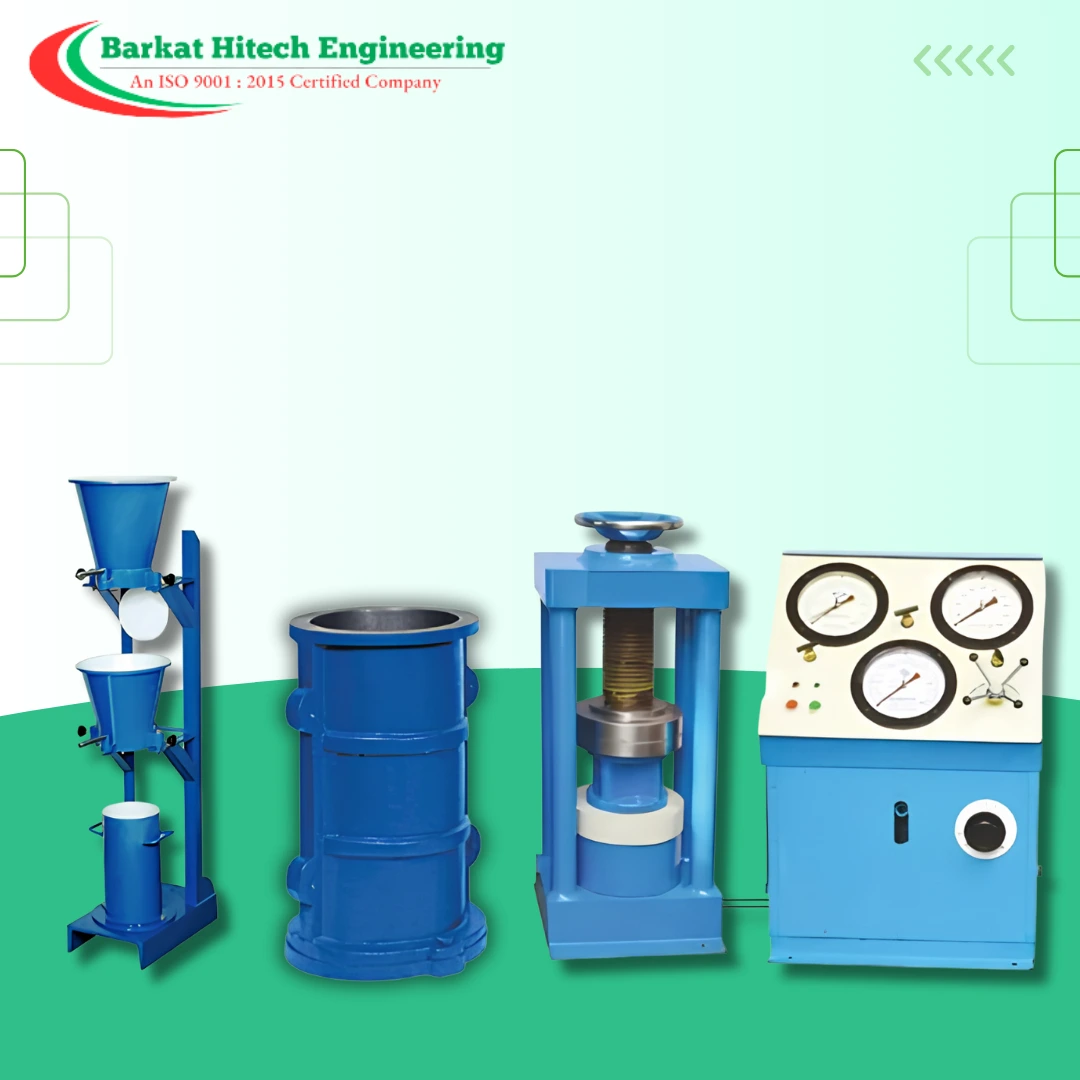
1. Digital Compression Testing Machines (CTM)
New-generation CTMs employ load cells and LVDTs for measuring cube or cylinder compressive strength. Includes:
- Real-time load vs. time curves.
- Automated peak load detection.
- Digital storage of test data for analysis in the past.
- Optional cloud integration for remote monitoring.
2. Flexural Testing Machines
- Smart sensors record the deflection of beams when bending.
- Real-time monitoring assists in accurate calculation of modulus of rupture.
- Digital feedback ensures accurate load application and failure detection.
3. Non-Destructive Testing (NDT) Devices
- Ultrasonic Pulse Velocity (UPV) testers test internal defects and quality without destroying the specimen.
- Embedded sensors send data directly to software dashboards for examination.
IoT and Cloud Integration
Contemporary concrete laboratories are advantaged by IoT-connected test equipment, in which sensors are linked to cloud systems:
- Centralized Data Storage: Track several machines in real-time from a common interface.
- Automated Alerts: Be notified when specimens fail or go beyond tolerance.
- Analytics and Reporting: See tests over time to refine mix designs and curing techniques.
- Predictive Maintenance: Machine well-being can be tracked to minimize downtime.
Advantages of Smart Sensors & Real-Time Monitoring
| Advantage | Description |
| Accuracy | Precise measurement of stress, strain, and displacement |
| Efficiency | Faster testing cycles and reduced manual effort |
| Safety | Automated stop at peak load prevents machine or specimen damage |
| Traceability | Digital records support ISO/IEC 17025 accreditation |
| Remote Monitoring | Data accessible from anywhere via cloud or LAN |
| Predictive Insights | AI can forecast material behavior and potential failures |
Barkat Hitech Engineering: Leading the Smart Revolution
Barkat Hitech Engineering integrates smart sensors and real-time monitoring in its digital compression and flexural testing machines. Key features:
- High-accuracy load cells and displacement sensors
- Real-time graphical feedback and data logging
- USB and cloud connectivity for remote monitoring
- Automated peak load detection and reporting
- Compliance with IS 516, ASTM C39, EN 12390
By combining traditional reliability with modern digital technologies, Barkat’s machines ensure faster, safer, and more precise concrete testing.
Real-World Impact
Case Example: Quality Control in a High-Rise Project
- Traditional manual testing required multiple technicians, manual readings, and hours of recording.
- With Barkat’s smart CTM, engineers monitored 10+ specimens simultaneously, capturing real-time load vs. time graphs.
- Automated reporting reduced errors and enabled faster decision-making, improving project quality and timelines.
Case Example: Research and Development Labs
- Concrete mix experiments with varying additives could be analyzed in real-time.
- AI integration predicted failure modes, helping researchers optimize mix designs before scaling to construction.
Future Trends
- AI-Powered Analysis: Smart sensors feeding data into predictive models.
- Portable Smart Machines: Battery-operated, IoT-enabled devices for field testing.
- Sustainable Material Testing: Smart monitoring for recycled concrete, fly ash cement, and green binders.
- Digital Twin Integration: Real-time testing data feeding into digital models for lifecycle management.
- Enhanced Automation: Robotic loading and automated specimen handling integrated with sensors.
Conclusion
Smart sensors and real-time monitoring are transforming concrete testing from a manual, time-intensive process into an intelligent, automated, and highly accurate system.
Engineers, lab managers, and construction companies benefit from:
- Reduced human error
- Faster, more precise testing
- Data traceability and regulatory compliance
- Predictive insights for better decision-making
Barkat Hitech Engineering leads this revolution in India, offering digital compression and flexural testing machines equipped with smart sensors, cloud connectivity, and real-time monitoring — helping modern construction meet the highest standards of quality, safety, and efficiency.