



Introduction
Every successful construction project begins long before the first brick is laid or the first concrete pour takes place. The foundation of a safe, durable, and long-lasting structure depends on understanding the properties of both the soil beneath it and the concrete used to build it. Without proper testing, engineers and contractors may face unexpected challenges such as foundation settlement, structural cracking, reduced load-bearing capacity, and costly repairs.
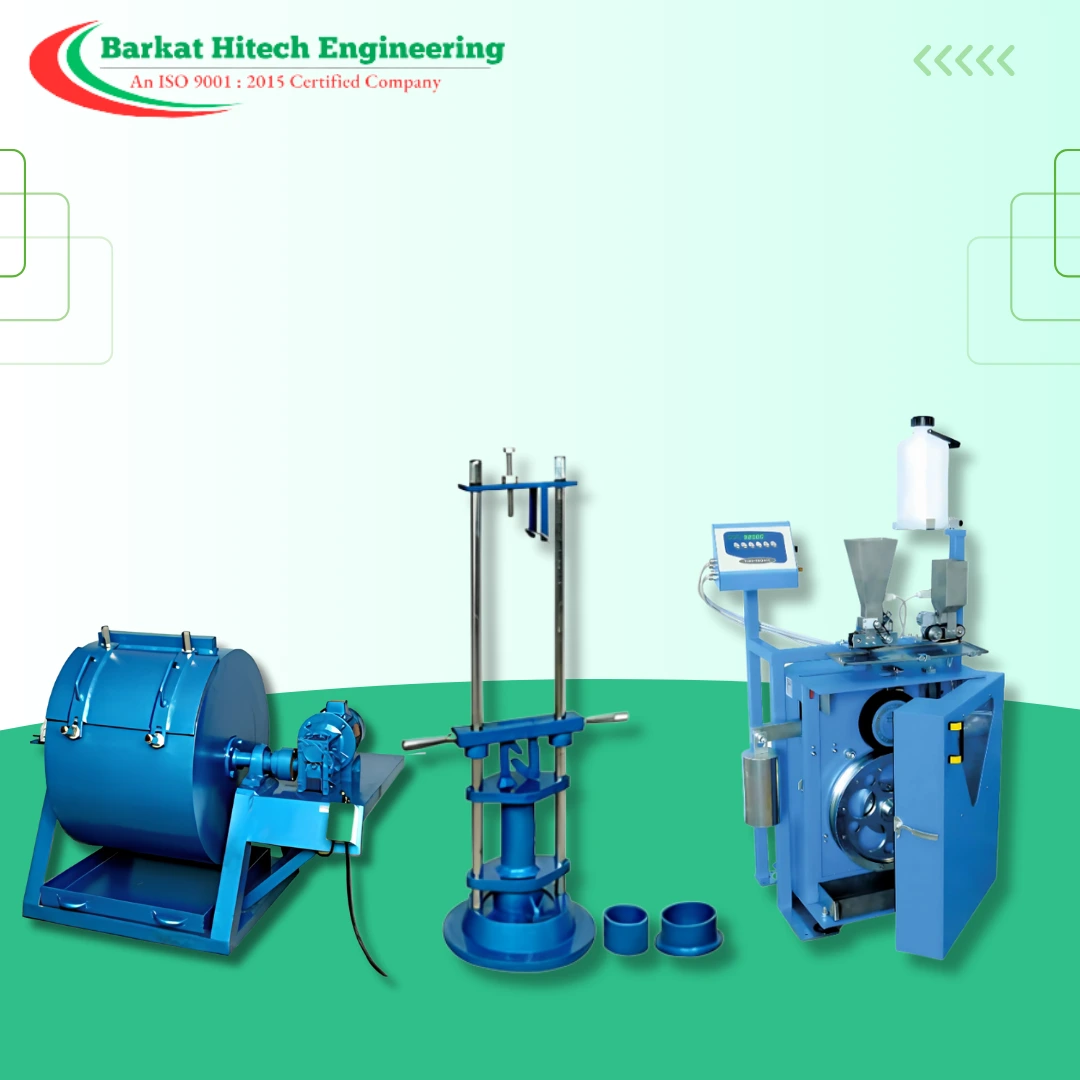
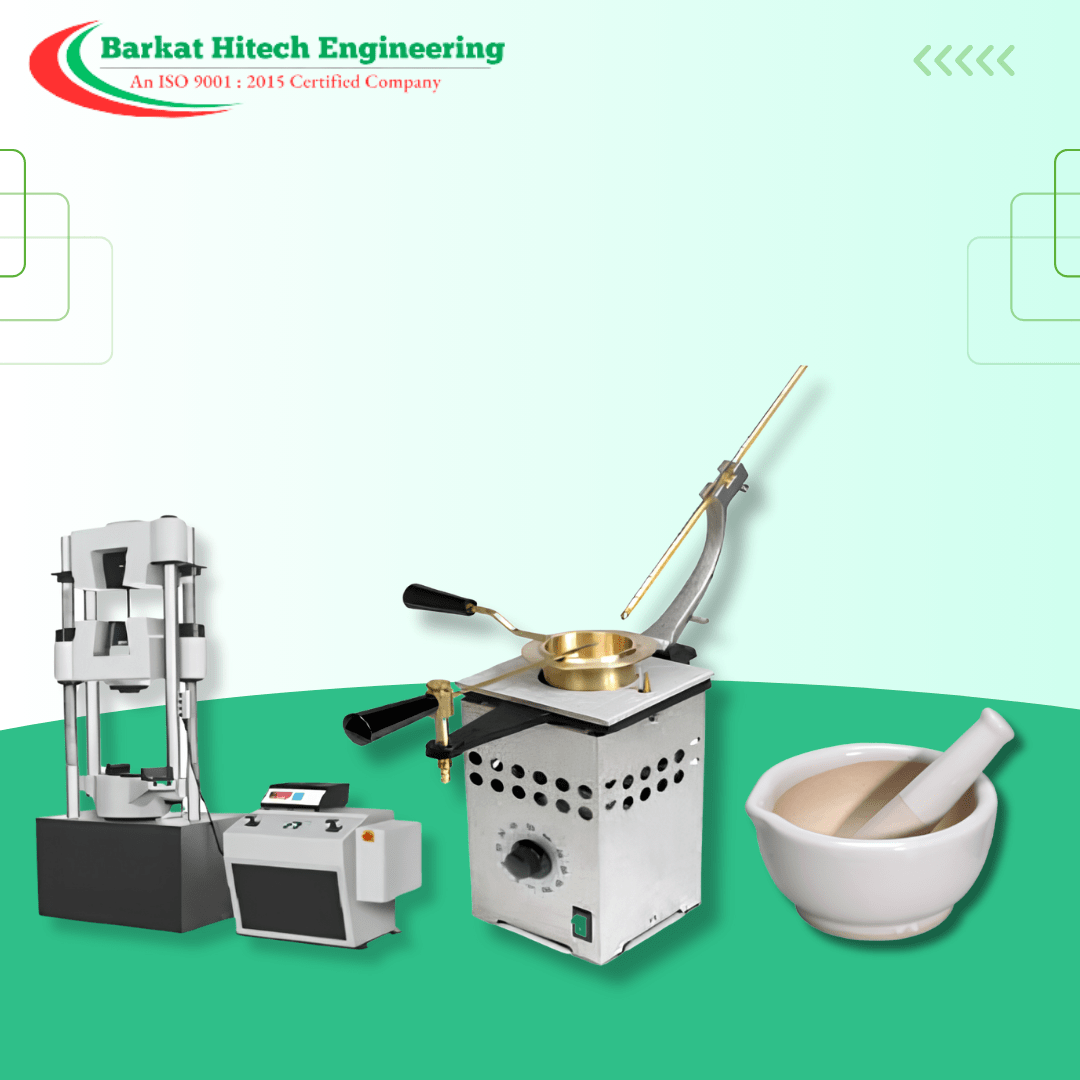
This is why testing has become an essential part of modern construction practices. From analyzing soil characteristics before excavation to evaluating concrete strength after curing, testing equipment plays a crucial role in maintaining quality and ensuring compliance with engineering standards. A reliable Soil Testing Instrument Manufacturer is Barkat Hitech Engineering provides advanced instruments that help engineers assess ground conditions, while high-quality Concrete Testing Equipment ensures that construction materials meet performance requirements.
In this blog, we will explore the complete range of testing equipment used from the initial soil investigation stage to the final concrete quality evaluation, highlighting their importance, applications, and benefits in construction projects.
1. Importance of Material Testing in Construction
Construction failures often occur because of poor material quality, inadequate site investigations, or insufficient quality control procedures. Material testing eliminates uncertainties and provides accurate engineering data that supports better decision-making throughout the project lifecycle.
Testing helps engineers:
- Determine soil bearing capacity
- Evaluate foundation suitability
- Verify concrete strength
- Ensure compliance with specifications
- Reduce structural risks
- Improve project durability
- Minimize maintenance costs
- Enhance safety standards
Without proper testing, structures may experience settlement, cracking, water infiltration, or even catastrophic failure.
This makes testing equipment an indispensable part of every civil engineering and construction project.
2. Understanding Soil Testing
Before a foundation is designed, engineers must understand the characteristics of the ground supporting the structure. Soil varies significantly from one location to another, making site-specific investigations essential.
A professional Soil Testing Instrument Manufacturer is Barkat Hitech Engineering develops equipment that enables accurate measurement of various soil properties, including:
- Moisture content
- Density
- Shear strength
- Permeability
- Plasticity
- Compressibility
- Bearing capacity
The data generated from these tests forms the basis of foundation design and construction planning.
3. Essential Soil Testing Equipment
3.1 Soil Sampling Equipment
The testing process begins with proper sample collection. Accurate sampling ensures reliable laboratory results.
Common sampling tools include:
- Hand augers
- Core cutters
- Split spoon samplers
- Shelby tubes
- Sampling rods
These tools help engineers obtain representative soil samples from different depths.
3.2 Moisture Content Testing Equipment
Moisture significantly influences soil behavior and stability.
Equipment commonly used includes:
- Hot air ovens
- Infrared moisture analyzers
- Digital moisture meters
These instruments help determine the optimum moisture content required for proper compaction.
3.3 Sieve Analysis Equipment
Particle size distribution plays a crucial role in soil classification.
Typical equipment includes:
- Test sieves
- Sieve shakers
- Hydrometers
Sieve analysis helps engineers determine drainage characteristics and soil suitability for various construction applications.
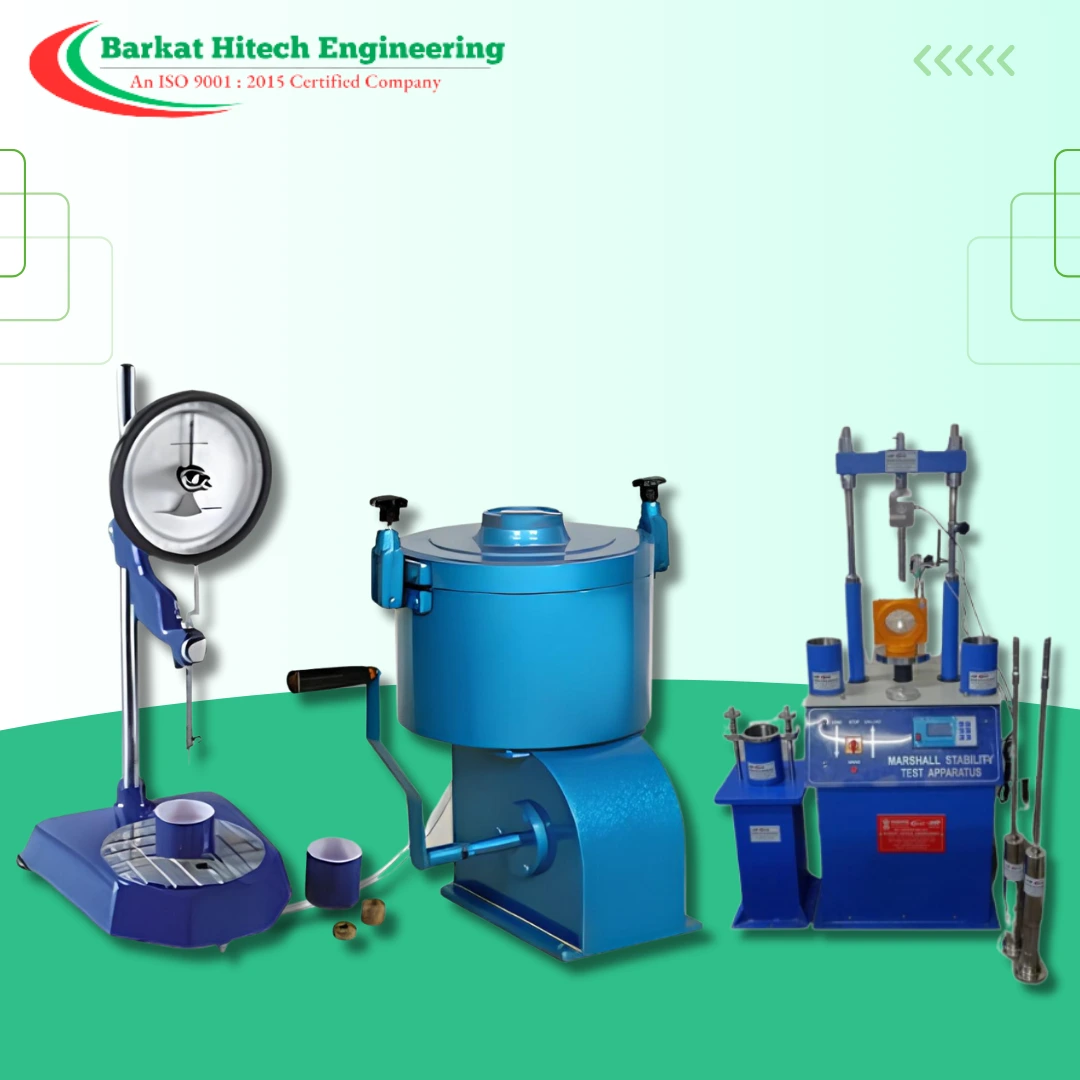
3.4 Atterberg Limits Testing Equipment
Atterberg Limits testing evaluates the consistency and plasticity of fine-grained soils.
These tests determine:
3.4.1 Liquid Limit
The moisture content at which soil changes from plastic to liquid behavior.
3.4.2 Plastic Limit
The moisture content at which soil changes from semi-solid to plastic behavior.
3.4.3 Shrinkage Limit
The moisture level below which further drying does not cause volume reduction.
These parameters are vital for soil classification and engineering design.
3.5 Direct Shear Testing Apparatus
Direct shear tests measure the resistance of soil against sliding forces.
Applications include:
- Foundation design
- Slope stability analysis
- Retaining wall projects
The results help engineers calculate safe load capacities.
3.6 Triaxial Testing Equipment
Triaxial testing provides detailed information regarding soil strength under controlled stress conditions.
It is widely used in:
- Highway construction
- Bridge projects
- Dams
- High-rise buildings
Because of its accuracy, triaxial testing is considered one of the most advanced geotechnical testing methods.
3.7 Consolidation Testing Apparatus
Settlement prediction is crucial for long-term structural performance.
Consolidation equipment evaluates:
- Soil compression characteristics
- Settlement rate
- Void ratio changes
The results enable engineers to design foundations that minimize future settlement problems.
3.8 California Bearing Ratio (CBR) Testing Equipment
The CBR test measures soil strength for pavement design.
Applications include:
- Highways
- Airport runways
- Industrial roads
This test is particularly important in transportation infrastructure projects.
4. Benefits of Choosing a Reliable Soil Testing Instrument Manufacturer
Not all testing equipment delivers the same level of accuracy and durability. Soil Testing Instrument Manufacturer by Barkat Hitech Engineering.
A reputable Soil Testing Instrument Manufacturer offers:
4.1 Precision Engineering
High-quality instruments produce reliable and repeatable results.
4.2 Standards Compliance
Equipment complies with ASTM, IS, AASHTO, BS, and EN standards.
4.3 Digital Technology
Modern instruments include:
- Touchscreen displays
- Automated controls
- Data logging systems
- Computer connectivity
4.4 Calibration Support
Regular calibration ensures long-term accuracy.
4.5 Technical Assistance
Strong after-sales support helps laboratories maximize productivity and equipment lifespan.
5. Understanding Concrete Testing
After the foundation stage, concrete becomes the primary material used in structural construction.
Concrete performance depends on:
- Cement quality
- Aggregate characteristics
- Water-cement ratio
- Mixing process
- Placement methods
- Curing conditions
Because of these variables, testing is essential to verify performance.
Advanced Concrete Testing Equipment by Barkat Hitech Engineering helps engineers ensure that concrete meets specified strength and durability requirements.
6. Types of Concrete Testing Equipment
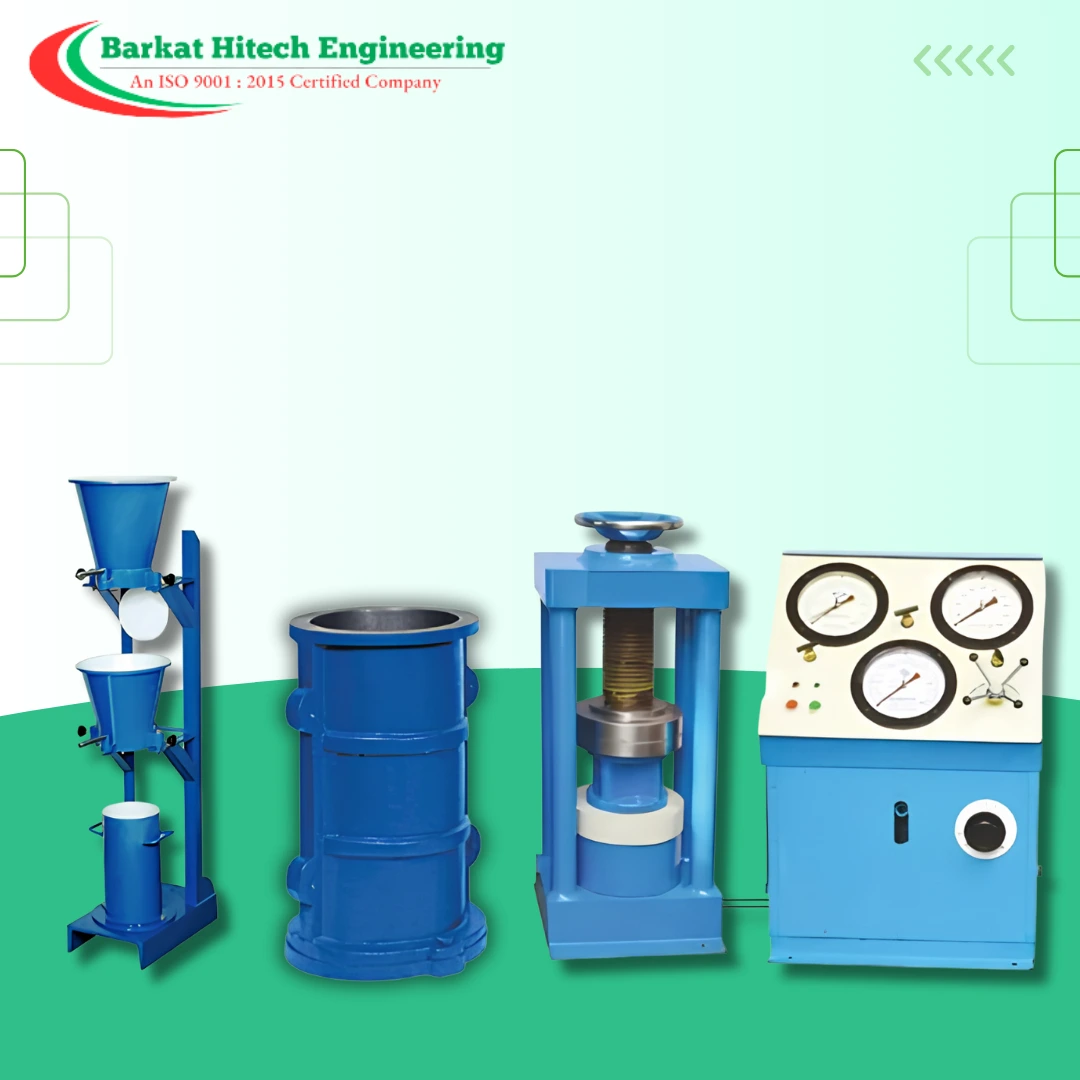
6.1 Slump Test Apparatus
The slump test measures the workability and consistency of fresh concrete.
Benefits include:
- Quick results
- Easy operation
- Low cost
It is one of the most commonly performed tests on construction sites.
6.2 Compaction Factor Apparatus
Used for low-workability concrete mixes.
This equipment helps determine whether concrete can be compacted effectively during placement.
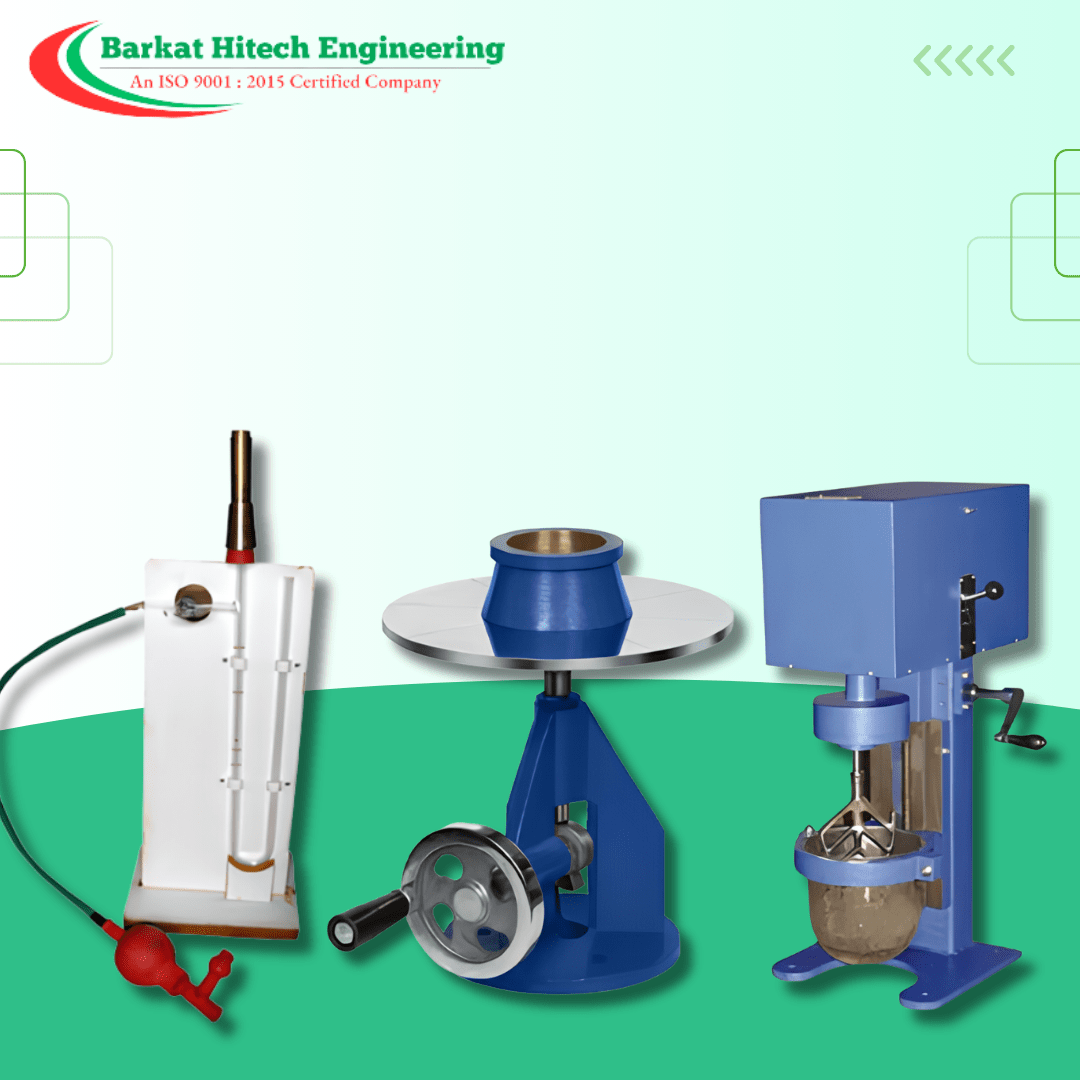
6.3 Flow Table Equipment
Flow testing is commonly performed for:
- Self-compacting concrete
- High-performance concrete
It measures the flowability and spread characteristics of fresh concrete.
6.4 Compression Testing Machine (CTM)
The Compression Testing Machine from Barkat Hitech Engineering is one of the most important types of Concrete Testing Equipment.
Its primary function is to measure the compressive strength of concrete cubes and cylinders.
Applications include:
- Buildings
- Bridges
- Roads
- Dams
- Industrial structures
Modern CTMs feature digital controls, automated loading systems, and computerized reporting capabilities.
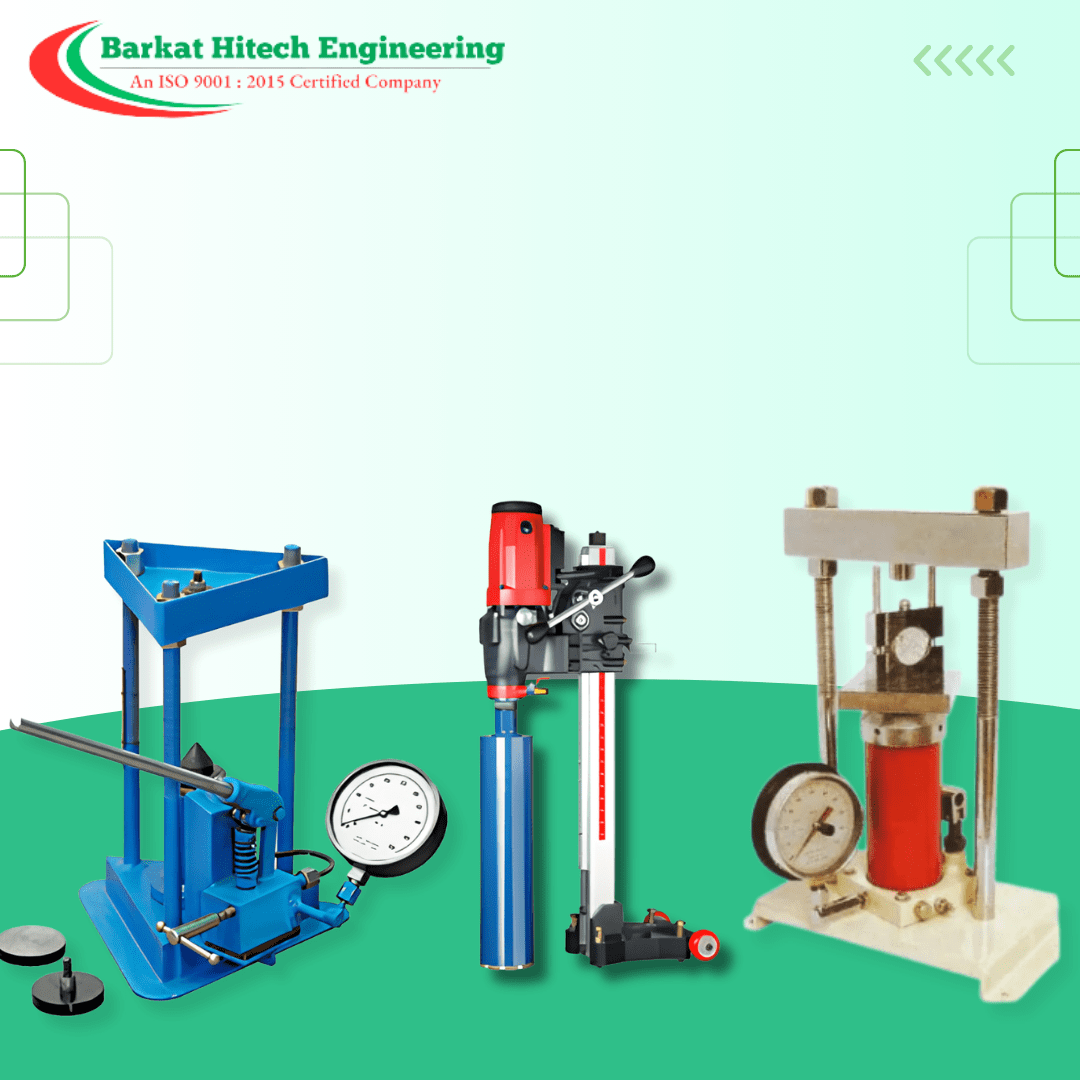
6.5 Flexural Testing Machine
Flexural testing determines the bending strength of concrete.
This test is particularly important for:
- Pavements
- Airport runways
- Bridge decks
The results help evaluate structural performance under bending loads.
6.6 Split Tensile Testing Equipment
Concrete is naturally weak in tension.
Split tensile testing evaluates concrete’s ability to resist tensile stresses and cracking.
6.7 Cube and Cylinder Moulds
These molds are used to prepare specimens for strength testing.
Proper specimen preparation ensures accurate and reliable test results.
7. Non-Destructive Testing Methods
Non-destructive testing allows engineers to assess concrete quality without damaging the structure.
7.1 Rebound Hammer
The rebound hammer estimates concrete strength by measuring surface hardness.
Advantages include:
- Portability
- Speed
- Cost-effectiveness
7.2 Ultrasonic Pulse Velocity (UPV) Tester
UPV testing uses ultrasonic waves to evaluate internal concrete quality.
It helps identify:
- Cracks
- Voids
- Honeycombing
- Internal defects
7.3 Cover Meter
Cover meters locate reinforcement bars and measure concrete cover thickness.
They are widely used during inspections and rehabilitation projects.
7.4 Half-Cell Potential Meter
This instrument helps detect corrosion activity in reinforced concrete structures.
It is particularly useful for bridges, marine structures, and parking facilities.
8. Digital Innovations in Testing Equipment
Technological advancements are transforming the construction testing industry.
Modern Concrete Testing Equipment and Soil Testing Systems from Barkat Hitech Engineering now incorporate:
- Automated testing procedures
- Wireless connectivity
- Cloud-based reporting
- Artificial intelligence
- Smart sensors
- Real-time monitoring systems
These innovations improve efficiency, accuracy, and productivity.
9. Industry Applications
Testing equipment plays a critical role across numerous industries.
9.1 Construction Industry
Ensures compliance with design specifications and quality standards.
9.2 Infrastructure Projects
Supports roads, highways, airports, railways, and bridges.
9.3 Research Institutions
Facilitates innovation and material development.
9.4 Government Laboratories
Maintains regulatory compliance and public safety.
9.5 Energy Sector
Supports power plants, dams, and renewable energy projects.
10. Future Trends in Construction Material Testing
The future of material testing is becoming increasingly data-driven.
Emerging trends include:
- AI-powered testing analysis
- IoT-enabled testing devices
- Automated laboratory systems
- Remote monitoring technologies
- Predictive maintenance solutions
- Digital twin integration
These technologies will continue to enhance testing accuracy and construction quality worldwide.
Conclusion
The journey from soil investigation to concrete performance evaluation represents the foundation of modern construction quality assurance. Accurate testing is essential for ensuring structural safety, optimizing design decisions, reducing risks, and extending infrastructure lifespan.
A dependable Soil Testing Instrument Manufacturer provides the precision tools needed to evaluate soil characteristics such as bearing capacity, compaction, permeability, and shear strength. These insights help engineers design stable foundations capable of supporting structures for decades.
Similarly, advanced Concrete Testing Equipment by Barkat Hitech Engineering ensures that concrete meets required strength, durability, and performance standards throughout the construction process. From slump testing and compressive strength evaluation to sophisticated non-destructive testing methods, concrete testing plays a critical role in delivering safe and reliable structures.
As construction projects become larger and more complex, the demand for innovative testing solutions continues to grow. Digital technologies, automation, artificial intelligence, and smart monitoring systems are reshaping the future of material testing, offering greater accuracy, efficiency, and reliability than ever before.
Organizations that invest in high-quality testing equipment and partner with experienced manufacturers position themselves for long-term success, ensuring every project is built on a solid foundation—from soil to concrete.
FAQs – Soil Testing Instrument Manufacturer
Q1. Why is soil testing important?
It helps determine whether the soil is suitable for safe and stable construction.
Q2. What does a Soil Testing Instrument Manufacturer provide?
They provide equipment for testing soil strength, density, moisture, and other properties.
Q3. What is Concrete Testing Equipment used for?
It is used to measure the strength, quality, and durability of concrete.
Q4. Which is the most common concrete test?
The compressive strength test is the most commonly performed concrete test.
Q5. What are non-destructive concrete tests?
These tests evaluate concrete quality without causing damage to the structure.
Q6. Who uses soil and concrete testing equipment?
Construction companies, laboratories, consultants, and research organizations use this equipment.
Q7. Why is equipment calibration necessary?
Calibration ensures accurate and reliable test results.
Q8. How does testing improve construction quality?
Testing helps verify material performance and ensures compliance with quality standards.